
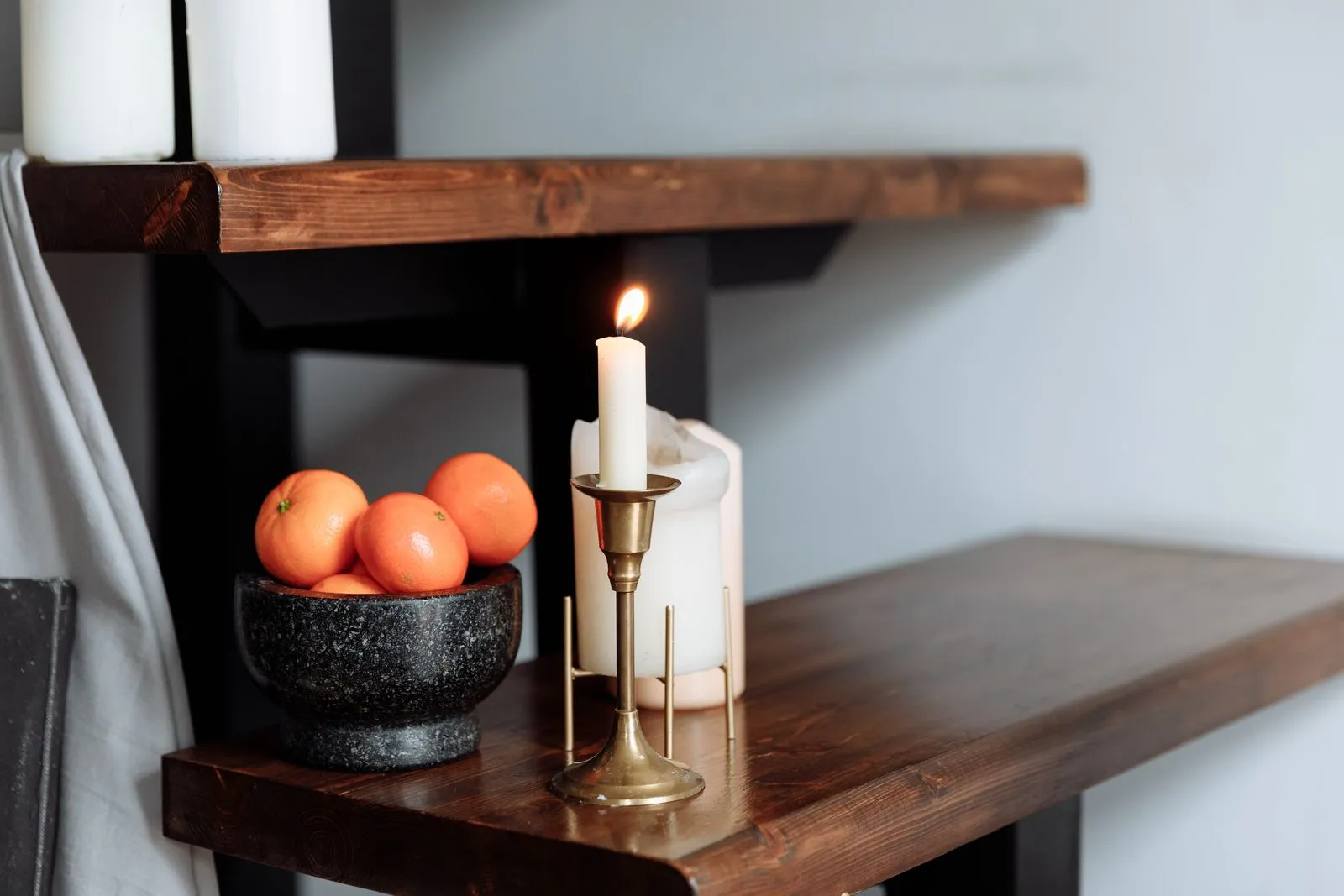
A wick that is too small may leave wax along the container walls, while one that is too large can create a tall, smoky flame. Choosing the right wick starts with measuring the candle’s inside diameter, but diameter alone does not determine the result. Wax type, fragrance, dye, and container shape also affect how a wick burns. Use the maker’s wick guidance as a starting point, then test the complete candle to find a size that burns steadily and cleanly.
Start With Container Diameter
Measure the inside width of the container across its widest point, not the outside. For a round vessel, one measurement is usually enough. For a square or irregular vessel, note the width in more than one direction and follow wick guidance for that shape. A wide container may need more than one wick, but adding wicks changes heat output and requires its own testing.
Wick charts can narrow your options, but they are not universal. Each supplier’s sizing system is specific to its wick series, and the same number from another series may burn differently. Check recommendations for your wax and container diameter, then choose a small range of candidate sizes for testing rather than relying on a single chart entry.
Understand Wick Size Effects
A wick that is too small may struggle to draw enough melted wax to the flame. The flame can look weak or flicker, and the melt pool may remain narrow, leaving a ring of unmelted wax near the edge. Do not assume a full edge-to-edge melt pool must form immediately; follow the wax and product testing guidance for the candle’s intended burn cycle.
An oversized wick can draw too much fuel. Watch for a flame that is persistently tall, heavy smoke, soot on the vessel, or excessive heat. A wick that is too large may also make the candle burn faster than intended. Trim the wick before each use as directed by the candle maker, but do not use trimming to compensate for a wick that consistently burns too aggressively.
Test Flame and Melt Pool
Test the finished candle, not just the wick in plain wax. Use the same wax, fragrance load, dye, container, and wick position planned for the final product. Burn it on a stable, heat-resistant surface away from drafts and combustible items, following the candle and wick supplier’s safety instructions. Record the wick type, test conditions, flame behavior, and melt pool at consistent intervals.
Look for a steady flame without persistent smoking, a melt pool that develops evenly, and a container that does not become excessively hot. Check for mushrooming at the wick tip, visible soot, and wax left on the sides. Extinguish the candle if it smokes heavily, the flame becomes unusually large, or the vessel shows signs of overheating. Never leave a burning candle unattended.
Adjust One Variable at a Time
If the flame is weak and the melt pool stays too small, test the next wick size in the same series. If the flame is too large or produces smoke and soot, try a smaller size. Change only one factor per test so you can tell what caused the difference. Keep notes, and repeat promising tests to check that the result is consistent across the candle’s burn life.
If changing wick size does not solve the issue, review other variables. Fragrance and dye can affect fuel flow, while wax blends and vessel dimensions influence heat and melt behavior. Center the wick carefully and confirm that the container is suitable for candle use. For a finished product, complete appropriate burn testing before offering it for sale; a single successful burn is not enough to confirm performance.
Choose a wick by combining container measurements, supplier guidance, and careful testing of the finished candle. Aim for a stable flame and an even, controlled melt pool without persistent smoke, soot, or excessive heat. Change one variable at a time and keep clear records. For help selecting a starting wick, contact London Vessel Candles.